China Top 10 Display Module Manufacturers?

China remains a major manufacturing base for display technologies, from compact OLED panels to industrial TFT assemblies. This guide explores ten China-based display module manufacturers with relevant capabilities, production experience, and international market exposure. It considers more than factory size or online visibility. Product consistency matters.

The review focuses on display module suppliers serving consumer electronics, medical equipment, automotive systems, smart appliances, and industrial controls. Key comparison points include panel technology, screen size, resolution, brightness, touch integration, viewing angle, operating temperature, and interface support. A practical supplier should also explain its quality process clearly. That includes sample approval, aging tests, incoming inspection, and traceability for critical components.

Details matter here.

Manufacturing capacity alone cannot guarantee dependable performance. A bright screen may still fail in a hot enclosure, while a low-cost module may require expensive redesign work. Supplier evaluations should include technical drawings, tolerance data, prototype feedback, and production samples. Certifications such as ISO 9001, RoHS, REACH, or product-specific approvals can support confidence, but documents should be checked carefully.

The ranking is not a permanent verdict. Market conditions, component availability, engineering teams, and customer service can change. Some manufacturers may excel at high-volume consumer displays, while others perform better with customized industrial modules. That distinction is easy to miss. This overview therefore offers a structured starting point, not a substitute for factory audits or technical verification. Readers should confirm current capabilities directly before signing a long-term agreement.
China Top 10 Display Module Manufacturers?

Display Module Manufacturing in China: Industry Overview and Scope

China Top 10 Display Module Manufacturers?

China’s display module industry covers LCD, OLED, touch panels, and emerging microdisplay solutions. Production is concentrated in coastal manufacturing clusters with strong glass, driver IC, backlight, and PCB supply chains. This proximity can shorten development cycles. It can also create intense price competition.

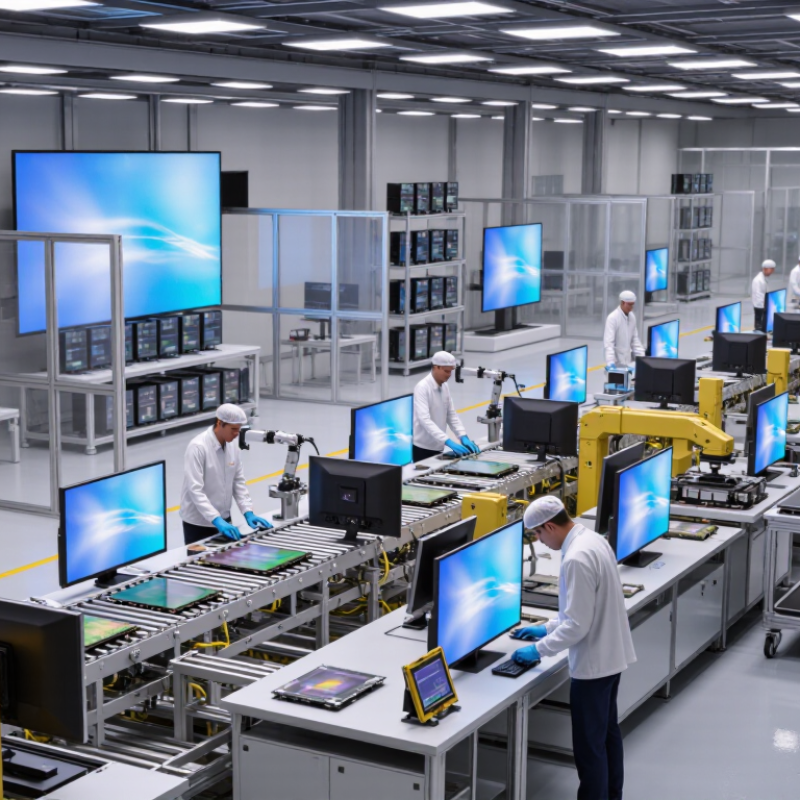
Manufacturers typically serve automotive dashboards, medical instruments, industrial controls, smartphones, and smart appliances. A capable supplier should provide optical design, mechanical integration, firmware support, and production validation. Factory visits may reveal details that brochures omit. Look for controlled cleanrooms, automated bonding lines, calibrated brightness tests, and traceable component records.

Quality assessment needs more than sample approval. Buyers should review uniformity data, viewing-angle results, touch accuracy, thermal cycling, humidity resistance, and connector durability. Pilot runs can expose dust contamination or weak adhesive bonds. These problems are expensive after mass production begins. A low quotation may hide tooling costs, limited engineering support, or unstable material sourcing.

The phrase “top 10” requires caution. Rankings change with capacity, technology, export experience, and sector focus. A supplier strong in industrial displays may not fit medical or automotive requirements. Certifications, audit records, response speed, and documented corrective actions offer more reliable evidence than online rankings. In practice, the best match depends on volume, operating temperature, brightness, interface, and expected service life. Even experienced buyers sometimes overvalue price and undervalue long-term engineering cooperation.

How to Evaluate China’s Top Display Module Manufacturers

Evaluating China’s top display module manufacturers requires more than comparing unit prices. Omdia’s 2024 Display Long-Term Demand Forecast estimates that mainland China holds over 70% of global LCD production capacity. This scale supports strong component access and competitive costs. However, capacity is not the same as dependable execution. Ask for recent yield data, monthly output, and audited delivery records. A factory tour helps. Screenshots do not.

Technical evaluation should cover brightness uniformity, color accuracy, viewing angle, touch performance, and lifetime testing. Request sample results under the same test conditions. DSCC’s 2024 OLED Shipment and Technology Report highlights continuing investment in flexible OLED capacity, but advanced capacity can still produce inconsistent early batches. Confirm the supplier’s panel sourcing, bonding process, cleanroom controls, and failure-analysis method. Check whether engineering staff can explain a failed sample without hiding behind vague terms.

Commercial reliability matters just as much. Review tooling ownership, engineering-change procedures, warranty limits, and spare-part planning. ISO 9001 certification is useful evidence, not final proof. Production traceability should connect each module to materials, operators, and inspection records. A low quotation may exclude calibration, packaging, or aging tests. That mistake is common. I would also order a small pilot batch before approving mass production, then compare defect rates after transport, temperature cycling, and repeated operation. The best supplier is not always the largest one; it is the partner whose data remains credible when the first batch goes wrong.

China’s Top 10 Display Module Manufacturers by Market Focus

China Top 10 Display Module Manufacturers?

China’s Top 10 Display Module Manufacturers by Market Focus

China’s display module sector is better understood through market focus than simple production scale. The leading ten supplier groups commonly serve automotive dashboards, smartphones, tablets, televisions, industrial controls, medical equipment, smart appliances, wearable devices, transport systems, and outdoor signage. Each area demands different engineering decisions. Automotive modules need vibration resistance and wide-temperature performance. Medical displays require stable brightness, accurate color, and traceable quality control.

Industrial and transport suppliers often prioritize long operating life, sunlight readability, and custom interfaces. Consumer electronics manufacturers compete through thin structures, high resolution, touch integration, and efficient production. Smart-appliance modules usually emphasize affordability, clear icons, and reliable performance in humid environments. Outdoor signage suppliers focus on brightness, sealing, thermal management, and easy maintenance. These priorities create very different definitions of “top.”

From practical sourcing experience, buyers should examine more than annual output. Review optical uniformity, dead-pixel controls, aging-test records, response time, warranty data, and engineering support. Ask whether the supplier can manage rapid design changes without weakening inspection standards. A factory may perform brilliantly in tablet modules but struggle with medical customization. No ranking is permanent. Market demand shifts quickly, and published capacity figures may not reflect usable capacity. Samples, factory audits, and small pilot orders remain essential before long-term cooperation.

China Top 10 Display Module Manufacturers? - China’s Top 10 Display Module Manufacturers by Market Focus

Rank Primary Market Focus Main Module Types Typical Screen Size Range Key Application Areas Production Strength Export Orientation Common Quality Standards Competitive Advantage
1 Large-format commercial display LCD video-wall modules, digital-signage modules, interactive display modules 32–110 inches Retail, education, transportation, corporate communications High-volume assembly with automated optical inspection and aging tests High; strong supply to overseas integrators and distributors ISO 9001, CE, RoHS, FCC, EMC testing Broad customization capability and stable large-panel supply
2 Automotive display systems TFT-LCD instrument clusters, center-stack modules, passenger displays 5–24 inches Passenger cars, commercial vehicles, electric vehicles Clean-room assembly, optical bonding, vibration and temperature testing Medium to high; qualification-based international supply IATF 16949, ISO 9001, AEC-Q related component requirements Strong reliability engineering and long product-life support
3 Consumer electronics IPS LCD, OLED, touch-display modules, AMOLED modules 3.5–15.6 inches Smart devices, tablets, handheld terminals, personal electronics High-throughput production with flexible model changeover High; serves OEM, ODM and contract-manufacturing channels ISO 9001, RoHS, REACH, CE, FCC Competitive pricing, short development cycles and broad interface support
4 Industrial and HMI displays Rugged LCD modules, sunlight-readable displays, touch HMI modules 4.3–21.5 inches Factory automation, instrumentation, energy and process control Low-to-medium volume production with engineering-led customization High; industrial distributors are an important channel ISO 9001, CE, RoHS, EMC and environmental testing Long-term availability, customized interfaces and extended-temperature options
5 Medical display equipment High-brightness LCD modules, medical touch panels, diagnostic displays 7–32 inches Patient monitoring, ultrasound, laboratory and clinical equipment Controlled assembly, calibration support and traceability procedures Medium; typically supplied through certified equipment manufacturers ISO 9001, ISO 13485 where applicable, CE, RoHS, EMC testing Consistent luminance, high reliability and documentation support
6 Smart retail and self-service terminals PCAP touch modules, kiosk displays, payment-terminal displays 5–32 inches POS systems, vending machines, kiosks and smart lockers Integrated display, touch, cover-glass and controller assembly High; supports customized overseas terminal projects ISO 9001, CE, FCC, RoHS, ESD and EMC testing Fast integration of touch, protective glass and enclosure components
7 Smart home appliances Segment displays, TFT-LCD modules, touch-control panels 2.4–15.6 inches Refrigerators, washing machines, ovens, air conditioners and controls Stable mass production with appliance-oriented environmental testing Medium to high; linked to global appliance supply chains ISO 9001, RoHS, REACH, CE and EMC testing Cost-efficient designs, durable touch surfaces and long-term supply planning
8 Security and transportation displays High-brightness TFT modules, rugged touch displays, sunlight-readable modules 4.3–23.8 inches Surveillance, access control, parking, ticketing and fleet systems Ruggedization, wide-temperature options and optical enhancement High; demand is supported by system integrators and project exporters ISO 9001, CE, FCC, RoHS, IP-rated design options Outdoor readability, durable construction and flexible mounting options
9 Wearable and compact devices Small TFT, OLED, AMOLED and round display modules 0.9–5.5 inches Wearables, medical sensors, handheld instruments and compact controllers Precision assembly for small form factors and curved or custom shapes High; commonly supplied to specialized international OEMs ISO 9001, RoHS, REACH, CE and ESD testing Miniaturization expertise and support for custom mechanical outlines
10 LED and specialty display modules LED display modules, monochrome LCDs, e-paper and custom display assemblies 0.96–320 inches Outdoor advertising, meters, signage, logistics and public information Application-specific production with modular cabinet and controller integration High; extensive project-based and distributor-led exports ISO 9001, CE, RoHS, FCC, EMC and ingress-protection testing Wide application coverage and strong customization for project requirements
Market-focus comparison based on commonly observed product capabilities, application segments and compliance requirements across China’s display-module manufacturing industry. Rankings indicate market specialization and supply-chain breadth rather than audited revenue order.

Key Technologies and Product Categories in Display Modules

China’s display module industry covers a wide range of technologies and product categories. The main choices include TFT-LCD, OLED, Mini LED, and e-paper modules. Each serves different performance and cost requirements. LCD modules remain practical for dashboards, monitors, industrial panels, and household devices. OLED modules provide deeper blacks, thinner structures, and flexible design options for mobile equipment. Mini LED improves brightness control through many small backlight zones.

Module quality depends on more than the panel itself. Engineers evaluate driver IC compatibility, touch accuracy, optical bonding, color calibration, and heat management. During supplier assessments, they also inspect dust control, edge sealing, and aging-test records. Small details matter. A module may look excellent in a showroom but show uneven brightness after extended operation.

Automotive displays require wide temperature performance, strong vibration resistance, and clear visibility under sunlight. Medical and industrial modules usually prioritize stable operation, long service life, and accurate image reproduction. Wearable products need lightweight structures and low power consumption. Smart home devices often balance touch response, viewing angle, and production cost. Manufacturing capacity matters, but technical communication matters too. A supplier that explains failure data clearly is often more reliable than one offering only attractive samples. I once assumed higher brightness always meant better quality; that view was too simple. Power use, thermal behavior, and user comfort can change the decision.

Choosing a Chinese Display Module Manufacturer for Your Project

China Top 10 Display Module Manufacturers?

Choosing a Chinese Display Module Manufacturer for Your Project

Choosing a manufacturer should begin with your display requirements, not a ranking list. Define screen size, resolution, interface, brightness, viewing angle, touch method, and operating temperature. A reliable supplier should explain trade-offs clearly. Ask for current datasheets, sample photos, test records, and production tolerances. Technical answers should match the actual module, not a generic catalog.

Evaluate production capability through a video audit or an in-person visit. Check clean assembly areas, optical inspection equipment, aging-test procedures, and traceability labels. Request a sample from the intended production line. Test it inside your enclosure, under sunlight, with gloves, during vibration, and through repeated power cycles. Confirm connector position and firmware support early. Small changes can create expensive tooling delays. A low quotation may be attractive. It may also hide missing tests or unclear warranty terms.

Tips: Compare at least three qualified suppliers. Put every specification into the purchase agreement. Confirm sample approval, lead time, defect criteria, and replacement responsibility in writing. Ask how they handle discontinued components. Good communication matters, but it is not enough. Factory photos prove little without records and live verification. Leave time for one redesign. Real projects rarely follow the first drawing perfectly.

China Display Module Manufacturing: Resolution Options to Compare

This chart compares widely used display resolutions when evaluating Chinese display module suppliers. Pixel counts are calculated from the stated horizontal and vertical resolution, helping project teams match image detail, processing requirements, power consumption, and target application.

Scroll to Top