Choosing a reliable led display module supplier is not simply a price comparison. Global buyers must examine brightness, pixel consistency, cabinet compatibility, service response, and long-term availability. A module may look excellent in a showroom, yet perform differently under direct sunlight, humidity, dust, or continuous operation.
Dr. Shuji Nakamura, a Nobel Prize-winning LED pioneer, once said, “The most important thing is to keep trying.” This principle also applies to supplier evaluation. Serious buyers should request production samples, aging-test records, color calibration data, and clear warranty terms. Ask how replacement modules are stored. Check whether the supplier can maintain the same LED bin and driver configuration several years later.
Small details matter.
A dependable supplier should explain refresh rate, scan mode, power consumption, ingress protection, and thermal design without hiding behind vague marketing language. Independent quality certificates can help, but documents alone do not prove field reliability. Speak with existing customers. Inspect a working installation. Review failure rates, delivery history, technical training, and spare-parts support.
This guide compares leading suppliers for different global purchasing needs, including rental events, outdoor advertising, control rooms, retail spaces, and stadium projects. It also considers regional logistics, communication quality, customization capability, and total ownership cost. The cheapest offer may become expensive after repeated module failures, color drift, or delayed replacements.
No supplier is perfect. That deserves honest attention. Buyers should record their priorities before contacting manufacturers, then score each supplier against measurable evidence rather than polished promises. A careful decision protects image quality, project schedules, and the credibility of the final display.
Top LED Display Module Suppliers for Global Buyers?
Global LED Display Module Market: 2024 Growth and Regional Demand Data
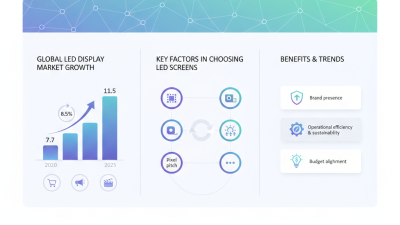
The global LED display module market expanded in 2024, driven by advertising, stadiums, transport hubs, and retail installations. Industry estimates commonly placed annual growth near 8% to 10%, although reporting methods differ. Forecasts are not perfectly aligned. Asia-Pacific remained the largest demand center, supported by construction activity and large-format outdoor screens. China, India, Southeast Asia, and South Korea showed strong production and installation momentum. Europe and North America continued favoring fine-pitch indoor modules for control rooms, corporate spaces, and premium retail. The Middle East showed rising demand for high-brightness outdoor displays, especially around tourism projects and public venues.
Regional conditions should guide supplier selection. Buyers in humid coastal areas need tested protection against moisture and corrosion. Hot climates require stable thermal performance, not only attractive brightness figures. Pixel pitch, refresh rate, cabinet compatibility, spare-part access, and documented testing should be reviewed together. From practical sourcing experience, low prices often hide higher replacement costs. That lesson remains easy to ignore.
Tips: Request sample modules before volume orders. Check brightness after calibration, not only on a specification sheet. Ask for aging-test records, warranty terms, and production consistency data. Keep critical spare modules near the installation site. A small local service network can prevent long operational delays. Forecasts may change, so avoid buying specifications that exceed the actual viewing distance.
Top LED Display Module Suppliers for Global Buyers?
LED Module Technologies: SMD, COB, and GOB Compared by Pixel Pitch
Pixel pitch should guide technology selection, not marketing language. SMD modules use separate red, green, and blue packages. They remain practical for outdoor walls and medium-pitch displays, often from 2.5 mm upward. They also offer familiar maintenance methods. However, exposed packages may face impact, dust, and moisture risks. COB places LED chips directly on the circuit board. This design supports very fine pixel pitches, smooth close-up images, and strong surface protection. Repair work can be more specialized, though. GOB adds a protective resin layer over SMD LEDs. It improves resistance to knocks, humidity, and surface contamination. Optical performance depends heavily on resin quality and processing accuracy.
Tips: Ask suppliers for pixel-pitch samples, brightness data, refresh rate, viewing distance, and thermal test results. Check whether module dimensions match your cabinet design. Request long-run aging reports and color-consistency records. A low price can hide difficult repairs later. It is an easy mistake to overlook.
For global buyers, reliable suppliers should explain LED binning, calibration, power management, and quality inspection procedures. They should also provide clear warranty terms and replacement-module support. SMD may suit cost-sensitive projects with accessible maintenance. COB fits premium indoor screens requiring tight pitches and clean surfaces. GOB can serve demanding spaces where SMD flexibility remains useful. Still, no technology wins every room. Real lighting, viewing distance, humidity, and service access can change the decision. Pixel pitch alone is not enough.
| Technology | Representative Pixel Pitch | Approx. Pixel Density per m² | LED Package or Surface Structure | Typical Brightness Range | Typical Viewing Distance | Common Module or Cabinet Formats | Typical Application Environment | Key Advantages | Main Considerations for Global Buyers |
|---|---|---|---|---|---|---|---|---|---|
| SMD | P1.25 | 640,000 pixels/m² | Surface-mounted RGB LED packages soldered to the PCB | 600–1,200 nits for indoor designs | Approximately 1.25–12.5 m | Commonly 320 × 160 mm modules; cabinet dimensions vary by manufacturer | Indoor control rooms, corporate displays, retail, broadcast and fine-pitch signage | Wide supply base, mature production process, good color consistency and straightforward maintenance | Package quality, LED binning, mask design, refresh rate and calibration should be verified before purchase |
| SMD | P2.5 | 160,000 pixels/m² | Surface-mounted RGB LED packages soldered to the PCB | 800–1,500 nits indoors; higher versions are available for semi-outdoor use | Approximately 2.5–25 m | Commonly 320 × 160 mm or 250 × 250 mm modules | Indoor advertising, meeting rooms, education, retail and event displays | Balanced cost, image detail and availability; easy access to replacement modules | Confirm whether the product is indoor-only, semi-outdoor or outdoor-rated; check IP rating and operating temperature |
| SMD | P4 | 62,500 pixels/m² | Surface-mounted RGB LED packages with conventional protective coating options | 4,500–7,000 nits for outdoor products | Approximately 4–40 m | Commonly 320 × 160 mm modules and 500 × 500 mm or 500 × 1,000 mm cabinets | Outdoor advertising, transportation hubs, sports venues and building façades | Strong outdoor brightness, broad viewing angles and extensive product availability | Outdoor reliability depends on waterproofing, power supply protection, heat dissipation and UV-resistant materials |
| SMD | P6.67 | Approximately 22,500 pixels/m² | Surface-mounted RGB LED packages, generally configured for long-distance viewing | 5,000–7,000 nits for outdoor products | Approximately 6.7–67 m | Commonly 320 × 160 mm modules; cabinet size depends on installation requirements | Large outdoor billboards, roadside signs and stadium perimeters | Lower cost per square meter and high brightness for distant audiences | Lower image resolution at close range; verify viewing-angle performance and local brightness regulations |
| COB | P0.9 | Approximately 1,234,568 pixels/m² | RGB LED chips directly mounted on the PCB and covered by a common protective layer | 600–1,200 nits for indoor fine-pitch products | Approximately 0.9–9 m | Often supplied as fine-pitch panels or modules using custom cabinet dimensions | Premium control rooms, virtual production, boardrooms and close-viewing displays | High pixel density, improved surface protection and reduced risk of individual LED lens damage | Repair procedures, color uniformity, coating quality and total cost should be evaluated carefully |
| COB | P1.25–P1.5 | 444,444–640,000 pixels/m² | Direct-chip package with an integrated protective surface layer | 600–1,500 nits, mainly for indoor applications | Approximately 1.25–15 m | Fine-pitch panels and sealed cabinet assemblies; formats vary more than standard SMD modules | High-end indoor signage, command centers, financial displays and premium meeting spaces | Excellent close-up image performance, strong surface protection and low visible pixel structure | Ask for detailed data on repairability, spare-part availability, coating uniformity and module interchangeability |
| GOB | P1.25–P2.5 | 160,000–640,000 pixels/m² | Conventional SMD LEDs covered by a transparent protective glue or resin layer | 600–1,500 nits for indoor products | Approximately 1.25–25 m | Commonly based on standard 320 × 160 mm or 250 × 250 mm module structures | Indoor rental displays, interactive screens, transport interiors and high-contact installations | Improved resistance to dust, moisture, impact and accidental contact compared with unprotected SMD surfaces | Surface coating can affect repair methods, heat transfer, color consistency and long-term serviceability |
| GOB | P4–P6.67 | 22,500–62,500 pixels/m² | Outdoor-oriented SMD module with a protective surface coating | 4,500–6,500 nits, depending on outdoor configuration | Approximately 4–67 m | Commonly 320 × 160 mm modules with outdoor cabinets in 500 × 500 mm or 500 × 1,000 mm formats | Outdoor rental screens, sports events, public areas and installations exposed to handling | Additional protection against impact and contamination while retaining the familiar SMD architecture | GOB coating does not replace a complete outdoor enclosure; verify IP rating, drainage, thermal design and service procedures |
Buyer note: Pixel density is calculated from the nominal pixel pitch using the formula 1,000,000 ÷ pitch². Brightness, viewing distance, module dimensions, IP rating, refresh rate and operating temperature are typical industry ranges rather than universal specifications. Final values should be confirmed in the supplier’s technical datasheet and sample inspection.
Global buyers should evaluate LED display modules through measured performance, not attractive specification sheets. Brightness is usually listed in nits, but usable brightness changes with viewing distance, sunlight, and protective coating. For outdoor installations, testing at several brightness levels reveals more than one maximum figure. Excessive brightness can waste energy and shorten component life.
Refresh rate deserves equal attention. A module rated above 3,840 Hz generally produces cleaner camera footage and smoother motion. Ask suppliers for test videos under different shutter speeds. Static showroom images can hide flicker. Pixel consistency also matters, especially across large installations. Inspect several modules, not only one sample. Small differences become obvious after thousands of panels are joined.
IP65 protection should cover both the front and rear under the stated installation conditions. Request test documentation, sealing details, and guidance for drainage and ventilation. A rating alone does not prevent moisture damage. Warranty terms require careful reading. Check coverage length, dead-pixel limits, repair response times, spare-part availability, and labor responsibilities across borders. Ask whether brightness decay is included. It often is not. I have seen buyers compare warranty years while overlooking shipping exclusions. That mistake can become expensive. A supplier that provides serialised test records, clear acceptance criteria, and realistic maintenance advice usually deserves closer consideration. Still, no document replaces a production sample tested in the intended climate. Supplier promises can sound precise, yet field conditions remain less cooperative.
Global LED module suppliers differ in product range, certification coverage, and production capacity. Buyers should compare these factors together, not separately. Fine-pitch modules suit indoor control rooms and retail walls. High-brightness outdoor modules handle sunlight, rain, and wider viewing distances. Flexible modules support curved columns, creative stages, and irregular installations. Some suppliers also provide rental, transparent, COB, and energy-saving options.
Certifications should match the destination market and project environment. Common documents include CE, RoHS, EMC, and UL-related compliance reports. Ask for current test reports, factory addresses, and traceable model numbers. A certificate without matching product information is weak evidence. Request samples before approving a large order. Check brightness, refresh rate, color consistency, waterproofing, and cabinet alignment under real conditions.
Capacity matters when a project needs thousands of modules within a fixed schedule. Review monthly output, spare-part ratios, aging-test procedures, and quality inspection records. Ask whether critical components come from stable sources. Production claims can sound impressive. Verify them through factory audits, batch photos, and shipment records. One overlooked detail is temperature control during transport and storage. Modules may pass factory tests but perform differently after long-distance delivery. My own project reviews have shown that technical promises sometimes exceed field results. That gap deserves honest discussion before payment terms are finalized.
Top LED Display Module Suppliers for Global Buyers?
Buyer Checklist: Energy Use, Lifespan, MOQ, Lead Time, and Total Cost
Global buyers should request measured energy data, not broad efficiency claims. Ask for watts per square metre at normal brightness and peak output. An indoor module running at 600 nits may consume far less than an outdoor unit. Check power supplies, heat paths, refresh rate, and brightness calibration together. A useful test uses the same cabinet size and operating schedule. Keep the report. Lifespan deserves similar discipline. Ask how the supplier defines failure, brightness loss, and operating hours. A “100,000-hour” rating can mislead without temperature, humidity, and duty-cycle conditions. Request sample aging records, warranty terms, and replacement-module procedures. One overlooked detail is spare matching. Color drift between old and new modules can remain visible on camera.
MOQ and lead time affect cash flow as much as engineering quality. Ask whether the quoted MOQ applies per pixel type, cabinet, or order. Confirm sample approval dates, production capacity, inspection points, and shipping buffers. A realistic schedule should include public holidays and customs clearance. Get milestones in writing. For total cost, calculate more than unit price. Include freight, duties, installation labor, control equipment, electricity, maintenance visits, and spare stock. A cheaper module may require more cooling or earlier replacement. Ask for a five-year cost model using your local electricity rate. Then challenge the assumptions. My checklist is not perfect; site conditions often defeat clean spreadsheets. Dust, sun, and unstable voltage may change the result. Suppliers who provide traceable test data, clear limitations, and responsive technical support are easier to evaluate. Still, verify claims with an independent inspection before a large purchase.
Indicative mid-market ranges for common LED display module categories. Values are planning benchmarks rather than quotations from any specific supplier.
Typical benchmarks used: indoor fine-pitch modules generally consume about 180–320 W/m², outdoor high-brightness modules about 450–800 W/m²; rated LED life is commonly 80,000–100,000 hours; standard MOQ often ranges from 10–50 m²; production lead time is commonly 15–30 days; and module pricing frequently falls between approximately US$120–450/m² depending on pixel pitch, brightness, protection level, and electronics. Confirm actual figures through a project-specific quotation.