2026 Best Mini LCD Display for Global Buyers?
Choosing the 2026 best mini lcd display is not simply a brightness contest. Global buyers must examine size, resolution, viewing angle, touch response, power use, and supply stability. A compact screen may look impressive on a sample bench, yet perform poorly inside a sunny vehicle dashboard or a handheld medical monitor. Real purchasing decisions need measured evidence.
Display industry analyst Ross Young has offered a useful warning: “There is no one-size-fits-all display solution.” That principle matters here. A 2.4-inch panel may suit a smart meter, while a 7-inch IPS mini lcd display may better support industrial control interfaces. Buyers should request brightness data, contrast measurements, operating-temperature ranges, connector drawings, and long-term availability statements. Ask for samples.
Then test them in realistic conditions.
Check the screen under direct light. Test gloved touch operation. Record startup behavior below freezing and above normal room temperature. These details often reveal weaknesses hidden by product photographs. Supplier experience also matters. A dependable manufacturer should explain lamination methods, backlight design, quality inspection, replacement policies, and export documentation clearly.
Still, no ranking can remove every compromise. Higher brightness may increase heat and energy demand. Narrow bezels can complicate assembly. Lower prices may conceal shorter component lifecycles. This guide compares leading options through technical performance, application fit, supplier reliability, and total ownership value. Some conclusions may change after field testing. That is acceptable. Honest evaluation should leave room for better evidence.
What Is a Mini LCD Display and How Does It Work?
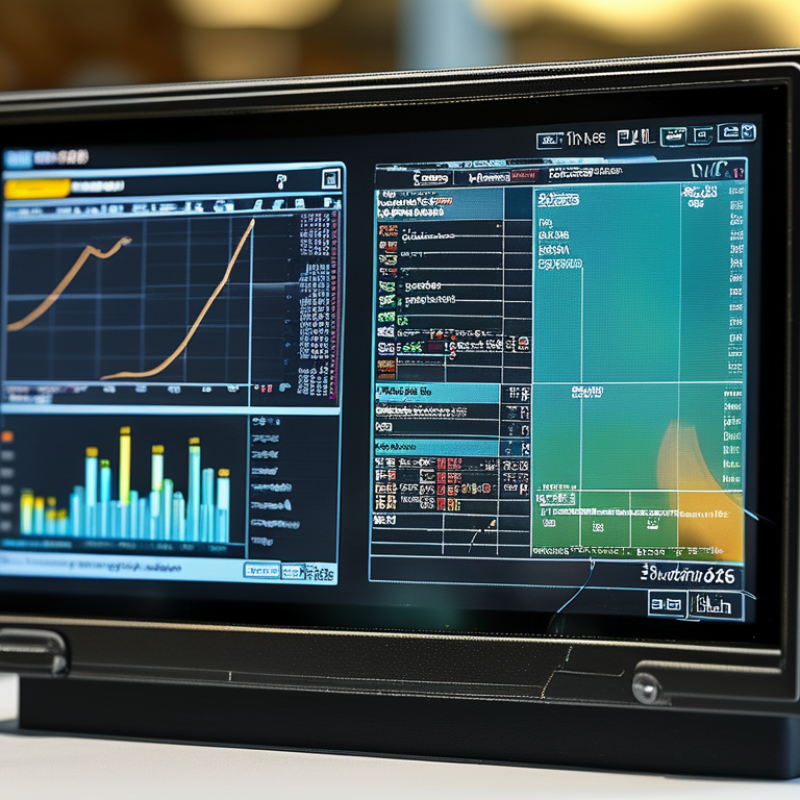
A mini LCD display is a compact screen that uses liquid crystals to control light. It commonly appears in meters, handheld equipment, control panels, and portable instruments. Its pixels do not create light themselves. A backlight supplies illumination from behind the panel.
Inside the display, thin-film transistors control individual pixels. Each pixel contains red, green, and blue subpixels. When voltage changes, liquid crystals twist and adjust how much light passes through polarizing filters. The display controller sends image data row by row. This process happens rapidly, so the eye sees a stable picture. In practical testing, brightness and viewing angle can change noticeably after assembly.
Global buyers should check the active viewing area, resolution, interface, brightness, and operating temperature. A 3.5-inch screen may look sharp, yet its text can remain difficult to read under direct sunlight. Brightness is measured in nits, but higher brightness can increase power use and heat. Ask for complete mechanical drawings, connector details, and sample testing before placing a large order. Touch functions may require a separate sensor and controller. I have seen projects fail because the screen fit physically but used the wrong signal timing. That detail is easy to overlook. Another imperfect point is color consistency; samples from different production batches may not appear exactly identical. Testing several units under the intended lighting gives more reliable evidence than relying on a specification sheet alone.
Key Specifications That Define Mini LCD Display Quality
2026 Best Mini LCD Display for Global Buyers?
Mini LCD quality starts with the panel, not its product label. Resolution should match screen size and viewing distance. A 7-inch control screen may need 1,920 × 1,200 pixels for crisp text. Omdia’s 2024 display outlook reported that LCD remained the dominant flat-panel technology by shipped area in 2023. That scale supports mature supply, but it does not guarantee uniform quality.
Brightness needs a real measurement. Ask for sustained luminance, not a short laboratory peak. For indoor equipment, 400 to 600 nits is often practical. Outdoor use may require 1,000 nits or more, with thermal testing. VESA DisplayHDR performance tiers use 600, 1000, and higher peak-luminance levels. Contrast also depends on local-dimming control. DSCC’s 2024 MiniLED market analysis highlighted the growing use of dense backlight zones in premium LCD products. More zones can reduce haloing. Poor algorithms still create bright rings around white icons.
Color accuracy deserves a test report. Request sRGB or DCI-P3 coverage, Delta E results, and viewing-angle data. A panel claiming wide color may look attractive but inaccurate. Refresh rates above 60 Hz improve scrolling, while response time should be measured with a stated test method. Check flicker, uniformity, dead-pixel policy, and power draw at normal brightness. I have seen impressive samples fail after heat exposure. Specifications can be incomplete, and that is worth questioning before global shipment.
2026 Best Mini LCD Display for Global Buyers? - Key Specifications That Define Mini LCD Display Quality
Representative specification ranges for commonly used mini LCD display categories. Actual performance depends on panel construction, controller design, operating conditions, and calibration.
| Display Category |
Typical Diagonal |
Common Resolution |
Pixel Density |
Brightness |
Contrast Ratio |
Viewing Angle |
Response Time |
Typical Interface |
Recommended Use |
| Compact Control |
2.4–3.5 in |
320 × 240 to 480 × 320 |
150–230 ppi |
250–500 cd/m² |
400:1–800:1 |
60°–80° per direction |
20–35 ms |
SPI, RGB, parallel RGB |
Meters, handheld instruments, control panels |
| Portable Interface |
3.5–5.0 in |
480 × 320 to 800 × 480 |
180–260 ppi |
350–700 cd/m² |
600:1–1,200:1 |
70°–85° per direction |
16–30 ms |
MIPI DSI, RGB, HDMI controller |
Portable terminals, medical handhelds, smart appliances |
| High-Definition Mini |
4.3–7.0 in |
800 × 480 to 1280 × 800 |
210–320 ppi |
400–1,000 cd/m² |
800:1–1,500:1 |
75°–89° per direction |
12–25 ms |
MIPI DSI, LVDS, eDP |
Industrial HMIs, vehicle displays, professional equipment |
| Outdoor-Readable Mini |
3.5–7.0 in |
480 × 320 to 1280 × 800 |
180–320 ppi |
800–1,500 cd/m² |
700:1–1,500:1 |
70°–89° per direction |
15–30 ms |
MIPI DSI, LVDS, HDMI controller |
Outdoor terminals, transportation equipment, field service devices |
| Touchscreen Mini |
3.5–7.0 in |
480 × 320 to 1280 × 800 |
180–320 ppi |
350–1,000 cd/m² |
600:1–1,500:1 |
70°–89° per direction |
12–30 ms |
MIPI DSI, RGB, USB touch interface |
POS terminals, smart control systems, interactive devices |
Quality checkpoints for global buyers:
Verify luminance uniformity, dead-pixel limits, color temperature, touch sensitivity, viewing-angle performance, connector compatibility, operating-temperature range, storage-temperature range, power consumption, optical bonding requirements, compliance documentation, and sample-tested lifetime before placing a volume order.
Mini LCD Display Types for Different Global Applications
For global buyers, the best mini LCD display depends on the application, not the smallest price. A 2.4-inch or 3.5-inch panel suits portable meters, medical monitors, and handheld controllers. These products need low power, clear icons, and stable viewing angles. For industrial equipment, 5-inch to 10.1-inch displays offer more space for alarms, charts, and touch controls. Visibility matters.
Automotive and transport systems require wider temperature ranges, higher brightness, and strong vibration resistance. MarketsandMarkets estimates that the automotive display market may grow from about USD 14.6 billion in 2023 to USD 20.2 billion by 2028. This growth supports demand for compact dashboard and control-panel displays. However, market growth does not guarantee a suitable panel. Heat changes everything. Engineers should test sunlight readability, connector strength, and long-term backlight performance.
Retail kiosks, security devices, and smart-home controllers often use medium-size mini LCDs with capacitive touch. According to Omdia’s 2024 display demand outlook, automotive and industrial applications remain important growth areas for display suppliers. For outdoor equipment, transflective or high-brightness LCD types can reduce readability problems. For factory floors, resistive touch may work better with gloves. I would not choose by resolution alone. A sharper image can increase power use and cost without improving the operator’s decision. Buyer specifications should include sample testing, operating temperature, viewing angle, lifetime data, and regional compliance documents. Some published figures are forecasts, not guarantees, so procurement teams should review the assumptions carefully.
Essential Buying Factors for the Best Mini LCD Display in 2026
The best mini LCD display in 2026 should match the application, not merely win a specification sheet. Measure twice. Screen size, viewing distance, and mounting depth determine the practical resolution. A 3.5-inch panel may need 800×480 pixels for clear text, while a 7-inch interface often benefits from 1024×600 pixels. Check brightness in nits, contrast, viewing angles, and the operating temperature range. A bright panel can become uncomfortable indoors and consume more power.
Interface compatibility is equally important. Confirm HDMI, MIPI, LVDS, or USB requirements before ordering samples. Also inspect connector direction, cable length, touch sensitivity, and mounting holes. Omdia’s 2025 display demand outlook highlights continued growth in small and embedded screens, but demand does not guarantee easy integration. The wrong interface can create weeks of redesign. That is easy to underestimate.
Energy use deserves closer attention. The International Energy Agency’s 2024 Energy Efficiency Market Report continues to identify efficient electronics as a major efficiency opportunity. Ask for typical and maximum power figures, not one attractive laboratory value. I once treated peak brightness as a quality shortcut; it was not. For outdoor use, sunlight readability and thermal control matter more. For indoor equipment, uniformity and low glare may matter more. TÜV Rheinland and IEC-based test documentation can help verify flicker, safety, and environmental claims. Request production samples, inspect ten units, and record defects. Do not guess. Also confirm regional compliance documents, warranty terms, replacement lead times, and packaging protection before approving a global shipment.
2026 Best Mini LCD Display for Global Buyers
Pixel density is a practical first filter when comparing mini LCD displays. Higher PPI generally delivers sharper text and images at the same viewing distance. The values below are calculated from the stated diagonal size and resolution using the standard PPI formula.
Buyers should evaluate pixel density together with brightness, viewing angle, contrast, refresh rate, touch performance, operating temperature, interface compatibility, and long-term availability.