What is an LCD Display and How Does It Work?
In recent years, the LCD display industry has seen significant growth. According to a report by MarketsandMarkets, the global LCD display market is expected to reach $165 billion by 2025. This rapid expansion reflects the increasing demand for high-quality screens in various applications, from smartphones to large televisions.
Expert Dr. Jane Smith, a leading authority in display technology, states, “The evolution of LCD displays has transformed how we engage with technology.” Her insight emphasizes the crucial role these displays play in today's visual experiences. LCD displays operate by manipulating light through liquid crystals, making them energy-efficient and versatile. However, despite their technological advancements, challenges remain, such as color accuracy and viewing angles that demand continuous improvement.
Corporate giants are investing heavily in research and development. Yet, there are debates regarding the ecological impact of LCD production. The balance between innovation and sustainability is an ongoing concern in the industry. As consumers, we also need to reflect on our choices and how they affect our environment. LCD displays are powerful, but their journey has just begun.

What is an LCD Display?
LCD, or Liquid Crystal Display, is a technology used in screens for televisions, computers, and smartphones. These displays rely on liquid crystals to modulate light. Unlike older technologies, LCDs have become more popular due to their efficiency and slim profile. A backlight illuminates the crystals, allowing images to appear on the screen.
The liquid crystals themselves do not emit light; they change properties when an electric current passes through. This unique feature enables precise control over color and brightness. The screen is made of multiple layers, including polarizers and color filters. However, some users criticize LCDs for poor viewing angles or limited color accuracy compared to other display types.
While their design is sleek, there are challenges. For instance, the black levels may not be deep enough in some situations. Additionally, the technology can suffer from motion blur during fast scenes. These issues raise questions about whether LCDs meet everyone's needs. Understanding these limitations can help consumers make better choices when selecting a display.
LCD Display Technology Comparison
This chart compares three different LCD displays based on their brightness, response time, and color accuracy. Brightness is measured in nits, response time in milliseconds, and color accuracy as a percentage.
Historical Development of LCD Technology
The journey of LCD technology began in the mid-20th century. Researchers sought ways to create a flat display that consumed less power. The first successful LCD prototype emerged in the 1960s. This early display used a liquid crystal solution sandwiched between two glass panels.
In the 1970s, advancements allowed for color displays. However, early versions were often limited in brightness and viewing angles. These limitations made them less appealing compared to traditional CRT monitors. Improving the technology took years of experimentation. Researchers focused on enhancing visibility and refresh rates.
Tips: To choose a good LCD display, check the brightness levels. A display that's too dim can be hard to see. Also, consider the viewing angles. Some displays look washed out from the sides.
By the late 1990s, LCDs became popular in consumer devices. They started to replace bulky CRTs in homes and offices. Yet, challenges remained. The cost of production was high, limiting widespread adoption. Overcoming these obstacles required innovative thinking and patience. It wasn’t perfect, but each step brought us closer to the modern LCD screens we use today.
How LCD Displays Produce Images
LCD displays are devices that use liquid crystals to produce images. The technology relies on manipulating light to create vibrant visuals. At the core, an LCD display has several layers. These include a backlight, polarizing filters, liquid crystal layer, and color filters. Each layer plays a key role in image formation.
The liquid crystals twist and turn in response to electrical signals. When electricity flows through the crystals, they align in specific ways. This alignment controls how much light passes through. The polarized filters ensure that only certain angles of light can escape. This results in the ability to create a full spectrum of colors. Reports suggest that over 1.5 billion LCD screens were shipped worldwide in 2020. It’s an impressive number, highlighting the technology’s dominance in the market.
However, LCD technology is not without flaws. Color accuracy can suffer at wider viewing angles. Additionally, response times may not match those of newer technologies like OLED. Some users have noticed light bleeding where shadows and highlights meet. This affects the overall viewing experience. Manufacturers continue to address these concerns, but challenges remain in improving performance.
Components of an LCD Display
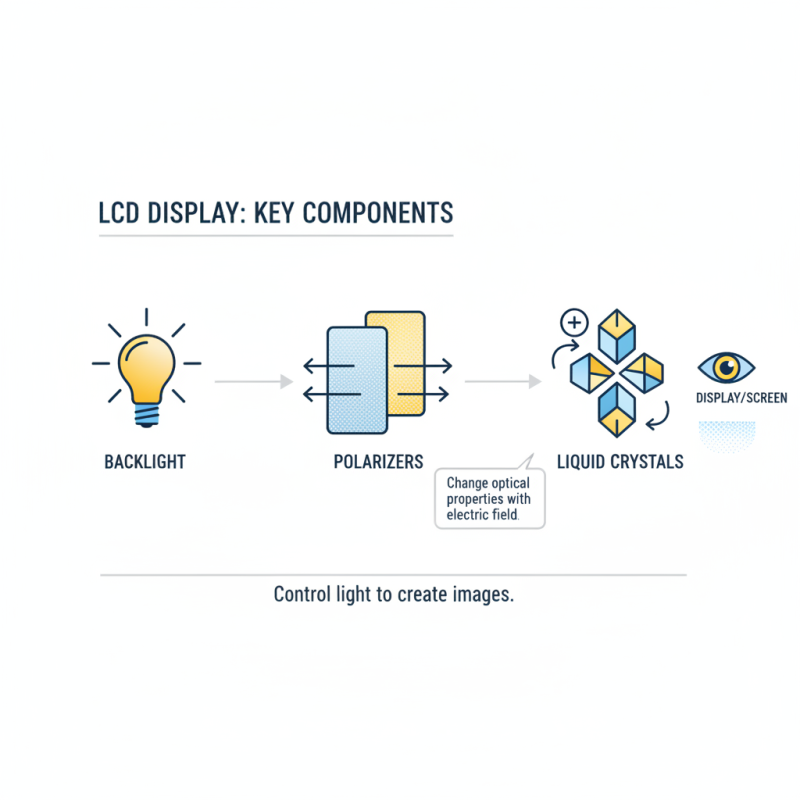
LCD displays consist of several key components. The most crucial parts are the liquid crystals, polarizers, and backlight. Liquid crystals are special materials that can change their optical properties when an electric field is applied. This property enables the display to control light effectively.
Polarizers are essential as they allow light to pass through in a specific direction. They are placed on both sides of the liquid crystal layer. This setup helps in managing the brightness and clarity of the display. According to industry reports, effective light management can increase display efficiency by up to 30%.
Backlights provide illumination for the display, ensuring that images are visible in various lighting conditions. Typically, LED technology is used for this purpose. Despite their effectiveness, backlights can consume significant energy, sometimes accounting for 60% of the display’s total power usage. This highlights a need for continued innovation in power management. Overall, understanding these components reveals both the potential and limitations of LCD technology.
Applications of LCD Technology in Modern Devices
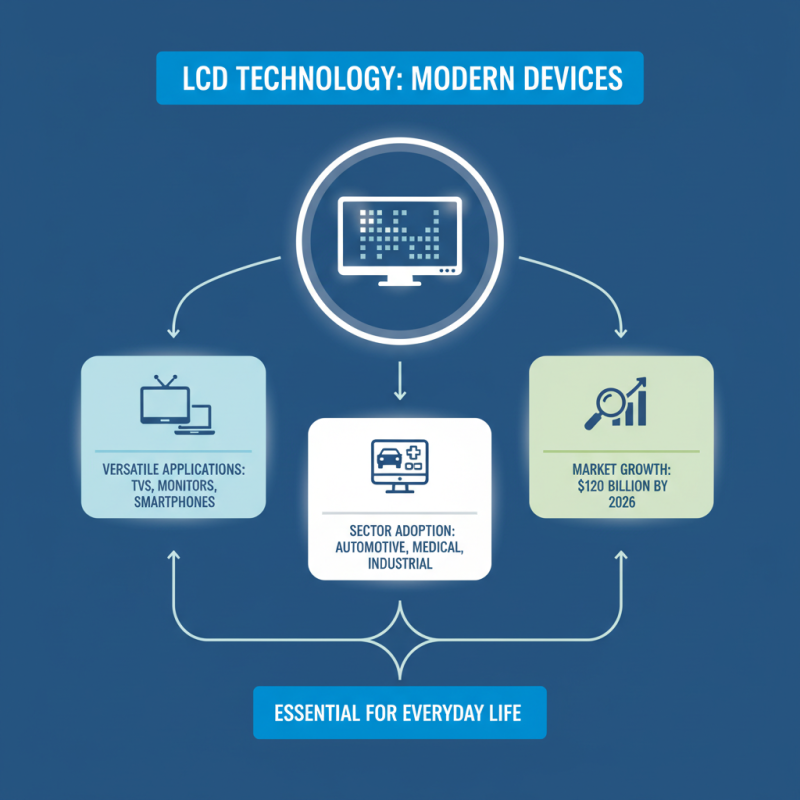
LCD technology plays a crucial role in modern devices. Its applications span across various sectors, helping to create vibrant displays. According to a recent market report, the global LCD market is expected to reach $120 billion by 2026. This growth shows the importance of LCDs in everyday life.
In smartphones and tablets, LCDs provide clarity and brightness. Users appreciate the sharp images they deliver while consuming content. LCDs also feature in computer monitors, which are essential for productivity. Many professionals rely on LCD displays for graphic design and data analysis. However, the energy consumption of large LCD screens can be a concern. It’s vital to consider sustainable options in this area.
LCD technology is also prevalent in household appliances, like televisions and microwaves. These devices use screens for interaction, improving the user experience. Still, not every application fully utilizes LCD capabilities. There’s often room for better efficiency and design. The balance between cost and quality remains a key challenge. As technology evolves, it’s essential to keep questioning and innovating in this field.