10 Essential Tips for Choosing the Best Outdoor LCD Display
In the ever-evolving world of technology, the demand for high-quality outdoor LCD displays has surged. Industry expert Mark Johnson emphasizes, “When selecting an outdoor LCD display, clarity and durability are paramount.” This statement reflects the importance of making informed choices in an industry filled with options.
Outdoor LCD displays serve various purposes, from advertising to information dissemination. Choosing the right one involves understanding specific needs. For instance, knowing the display's brightness is crucial. A bright display ensures visibility on sunny days. However, not all products provide adequate brightness, leading to potentially disappointing outcomes.
Moreover, consider the maintenance aspects of outdoor LCD displays. Some models require frequent upkeep, which can be a hassle. In a market where technology is advancing quickly, it’s easy to overlook essential features. Balancing cost with quality often results in tough decisions. Buyers need to reflect on their priorities and understand that a low price might mean sacrificing functionality.
Understanding Environmental Ratings: IP and NEMA Standards Explained
When selecting an outdoor LCD display, understanding environmental ratings is crucial. The most common standards are IP (Ingress Protection) and NEMA (National Electrical Manufacturers Association). These ratings determine how well a display can withstand various environmental conditions. For instance, an IP65 rating indicates the display is dust-tight and can handle low-pressure water jets. Choosing a display with a high IP rating ensures durability against rain, dirt, and dust.
NEMA ratings provide insight into a product's ability to endure specific environments. Categories range from NEMA 1, which is for indoor use, to NEMA 4X, designed for harsh outdoor conditions. A NEMA 4X rating means the display can resist corrosion and moisture. However, not all displays labeled as "outdoor" meet these rigorous standards. Ensure that the product's specifications align with your specific outdoor usage. Sometimes, manufacturers use marketing terms that can mislead buyers. Careful consideration is necessary to avoid costly mistakes.
Analyzing Brightness Levels: How to Choose the Right Nits for Outdoors
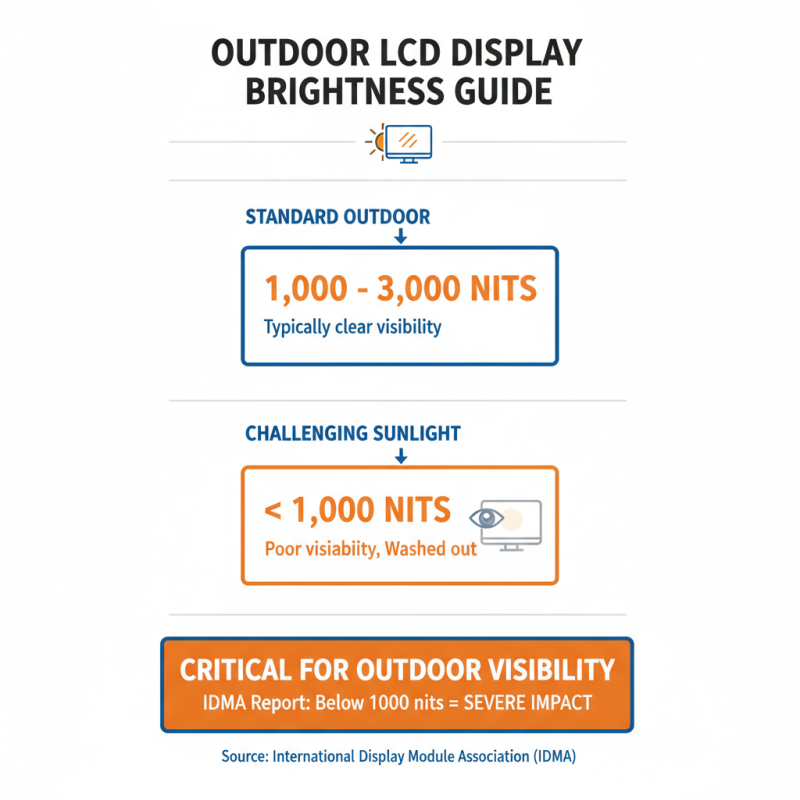
When selecting an outdoor LCD display, brightness is critical. The standard brightness for outdoor screens usually ranges from 1,000 to 3,000 nits. A recent report from the International Display Module Association (IDMA) indicates that displays below 1,000 nits may struggle in bright sunlight, severely impacting visibility. Brightness levels determine how clearly your content will be seen outdoors.
Consider environments where your display will be installed. In direct sunlight, a higher brightness of at least 2,500 nits may be necessary. Studies show that outdoor digital signage with around 2,500 nits sees 60% better visibility during peak sunlight hours. In contrast, displays under 1,500 nits can lose a significant portion of their effectiveness. This discrepancy can lead to wasted investment if not carefully assessed.
Another factor to weigh is energy consumption. Higher brightness levels often mean higher power usage. Some reports suggest a display with 3,000 nits consumes up to 30% more energy than one at 1,500 nits. Understanding your needs for brightness versus sustainability is crucial. Balancing these elements may require further analysis, ensuring that you choose a solution that meets both visibility and cost-effectiveness.
Evaluating Temperature Range: Optimal Operating Conditions for LCD Displays
When selecting an outdoor LCD display, evaluating temperature range is crucial. Extreme weather can affect performance. Displays often need to operate in both high heat and cold conditions. A display that cannot handle these variations may fail prematurely. Look for units designed to operate within a wide temperature range. Many models specify limits, usually from -20°C to 50°C. However, not all displays meet these standards reliably.
Consider the installation location. Does it face direct sunlight? Is it in a shaded area? These factors influence the display’s operating temperature. If a display overheats, it may dim or shut down. This heat can also degrade components over time. Check for features like built-in cooling systems or heat-resistant designs.
Yet, even the best products may have weaknesses. A display that performs well in cold might struggle with humidity. Examine customer reviews for real-world use cases. Look for feedback on temperature resilience. Manufacturers’ claims can differ from actual performance. Understanding the limits of a display can save you from future headaches. Make informed decisions based on your specific environment.
Importance of Anti-Glare Technology: Enhancing Visibility in Sunlight
When selecting an outdoor LCD display, anti-glare technology is critical. This technology plays a significant role in enhancing visibility under direct sunlight. According to recent industry reports, screens without anti-glare features can lose up to 80% of their visibility in bright conditions. That's a staggering amount, making such displays nearly unusable outside.
Anti-glare screens utilize special coatings to diffuse sunlight. This helps reduce reflections and improve clarity. For instance, a report by the Display Research Institute noted that displays with anti-glare technology improved visibility by 50% in daylight settings. This enhancement is crucial for outdoor advertising and information kiosks where readability is vital.
However, not all anti-glare technologies are created equal. Some coatings may reduce brightness and color accuracy. It's a trade-off that potential buyers need to consider carefully. An inappropriate choice could lead to disappointing performance in varied lighting conditions. Testing different models in real environments is advisable. Ensuring increased visibility and functionality should guide the decision, especially for displays meant for heavy outdoor usage.
Assessing Durability: The Role of Materials and Build Quality in Outdoor Displays
When selecting an outdoor LCD display, the materials and build quality are crucial. Devices exposed to harsh weather need sturdy materials. Look for options made from aluminum or high-grade plastics. These materials resist corrosion and wear, extending the lifespan of the display. A strong housing protects electronic components from moisture and dust.
However, not all displays offer the same durability. Sometimes, a device seems robust but uses inferior internal components. This can lead to malfunctions over time. It’s essential to check the IP rating, which indicates resistance to water and dust. Higher ratings mean better protection. Pay attention to glass quality as well. Tempered glass can withstand impacts better than standard options.
Reflecting on your choices is vital. Sometimes, we choose based on immediate costs. Yet, a well-built display might save money in the long run. Weak materials can lead to more repairs or replacements. Always consider the environment the display will face. Conditions can vary greatly, influencing the display's performance. Taking the time to assess these aspects ensures a more informed decision.