10 Essential Tips for Choosing the Right LCD Display for Your Needs?

Choosing the right LCD display can be daunting. With so many options out there, one can easily feel overwhelmed. John Smith, an expert in LCD technology, once said, “A good display can enhance your experience, but the wrong choice can ruin it.”

Finding the perfect LCD display depends on various factors. Screen size, resolution, and intended use are crucial. A gaming setup demands a different display compared to a professional editing suite. It's essential to identify your specific needs before making a decision.

Remember, not every LCD display will meet your expectations. Sometimes, what seems perfect on paper may not deliver in real life. Be prepared to rethink your choice if it doesn't suit your environment or usage. Carefully weigh your options, and don’t rush the decision.

10 Essential Tips for Choosing the Right LCD Display for Your Needs?

Understanding Your Display Requirements for Different Uses

Choosing the right LCD display starts with understanding your specific needs. Different applications require different features. For instance, a display for gaming should offer a high refresh rate, typically 120Hz or higher. This rate allows for smoother motion and reduces blur. On the other hand, a professional workspace may prioritize color accuracy. A display with a 99% Adobe RGB coverage ensures true color representation, which is vital for graphic design.

Viewing distance is another crucial factor. A larger screen is necessary for presentations viewed from afar. Reports indicate that screens over 32 inches are optimal for group settings. However, placing a large screen too close can lead to strain.

Additionally, consider ambient light conditions. Glossy screens perform poorly in bright environments. Instead, matte finishes can help reduce glare. Surprisingly, only 35% of users consider their lighting environment when choosing a display. This gap suggests a need for increased awareness. Think critically about these factors. Each one can impact usability and overall satisfaction with your choice.

10 Essential Tips for Choosing the Right LCD Display for Your Needs

Tip No. Consideration Description Recommended Usage
1 Screen Size Choose a size that fits your workspace and usage needs. Home, Office, Gaming
2 Resolution Higher resolution provides better image clarity. Photo Editing, Gaming, Office Work
3 Refresh Rate A higher refresh rate improves motion clarity. Gaming, Video Editing
4 Panel Type Different panels offer varying color accuracy and viewing angles. Photography, Media Creation
5 Connectivity Options Ensure compatible ports for your devices. General Use, Gaming
6 Brightness Level Brighter screens are better for well-lit environments. Bright Rooms, Outdoor Use
7 Color Accuracy Important for design work and graphics. Design, Photography
8 Response Time Shorter response times reduce motion blur. Gaming, Sports Viewing
9 Ergonomics Adjustable stands help reduce neck and eye strain. Long Work Hours, Office Use
10 Energy Efficiency Look for ENERGY STAR ratings to save on costs. Continuous Use, Environmentally Conscious

Evaluating Screen Size and Resolution for Optimal Viewing Experience

When selecting the right LCD display, screen size and resolution greatly impact your viewing experience. Consider your primary use. If you watch movies or play games, a larger screen offers immersion. However, a small space may not support a huge display. A balance is essential. Too large a screen in a cramped room can lead to discomfort.


Resolution plays a crucial role as well. Higher resolution means sharper images. For detailed graphics, 4K displays excel. Yet, if the screen size is small, the difference may not be noticeable. You might find yourself questioning if the upgrade is worth it. Many people settle for 1080p without fully understanding its limitations.


Additionally, think about your distance from the screen. Sitting too close can cause strain, even on a high-resolution display. Evaluate your habits. If you enjoy casual viewing, a middle-ground resolution may suffice. However, if you're an avid gamer or designer, your eyes will thank you for investing in quality. Always reflect on your needs versus wants when making a choice.

Comparing Panel Types: IPS, TN, and VA for Quality and Performance

When choosing an LCD display, understanding panel types is vital. IPS, TN, and VA panels each have unique features. IPS offers stunning color accuracy and wide viewing angles. It’s ideal for graphic design and photography. However, response times may not be as quick as others.

TN panels excel in gaming due to their fast refresh rates. They are cost-effective but have limited viewing angles and inferior colors. If you need speed, this is the way to go. Yet, for general use, TN may feel lackluster.

VA panels strike a balance. They provide good contrast and deeper blacks. They can be great for watching movies. However, their response times can lag behind IPS and TN.

When choosing an LCD display, think about your main use. Ask yourself these questions: Do you need speed? Is color accuracy essential? Make sure to evaluate your requirements. Do not rush your decision. Each panel type has benefits and drawbacks. Knowing this can help avoid regret later.

Assessing Connectivity Options: HDMI, DisplayPort, and More

10 Essential Tips for Choosing the Right LCD Display for Your Needs?

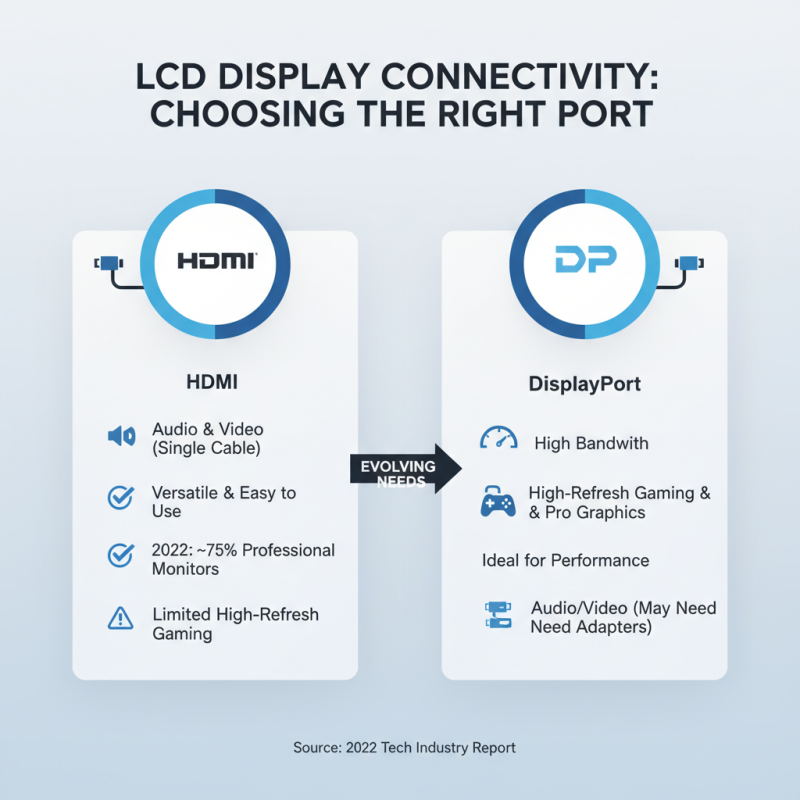
When choosing the right LCD display, connectivity options are critical. HDMI and DisplayPort are among the most common choices. In 2022, nearly 75% of professional monitors adopted HDMI for its versatility and ease of use. HDMI supports audio and video through a single cable, making it user-friendly for everyday tasks. However, it may not provide the bandwidth needed for high-refresh-rate gaming.

DisplayPort offers a higher bandwidth than HDMI, which is crucial for gamers and graphic designers. In fact, DisplayPort 2.0 can support up to 8K resolution at 60Hz. Despite its advantages, it only accounts for about 20% of monitors on the market. This can leave some users feeling limited, especially if their devices primarily support HDMI. It raises questions about future-proofing your investment.

USB-C has entered the mix as well, emerging as a robust option. It combines video output, power delivery, and data transfer. In a 2023 survey, around 30% of users expressed a preference for USB-C due to its all-in-one capabilities. But not all devices support it, which can lead to compatibility issues. Research shows that understanding these connectivity options can influence purchasing decisions significantly. Users should evaluate their current and future needs carefully to make an informed choice.

Considering Budget and Brand Reputation for Long-Term Satisfaction

When selecting an LCD display, budget and brand reputation play crucial roles in long-term satisfaction. According to a recent industry report, nearly 54% of consumers regret their purchase due to insufficient research on brand reliability. Price often influences choices, but spending less can lead to sacrificing quality. This is especially true with LCD displays, where a low upfront cost might result in higher long-term replacement expenses.

Many people overlook the importance of brand reputation. Older brands may offer proven technology and customer support. Research shows that displays from reputable brands typically have a lower failure rate. In fact, monitors from established brands reported an average lifespan of 30% longer than lesser-known alternatives. While it may be tempting to chase sales, consider potential hidden costs. Your budget should include maintenance over time. Without considering these factors, you might end up unhappy with your choice. Purchasing an unfamiliar brand could lead to disappointment. Quality shows in performance and longevity, impacting your overall experience.

LCD Display Features Comparison

This chart compares key features of LCD displays, including resolution, brightness, refresh rate, response time, and contrast ratio. Understanding these metrics can help you make an informed decision based on your needs and budget.

Scroll to Top