10 Best LED Display Controllers for Global Buyers
Global buyers are choosing LED walls for retail, stadiums, transport hubs, and corporate spaces. They are not judging performance by pixel pitch alone. Grand View Research reports that the global LED display market is expanding steadily, driven by outdoor advertising, live events, and digital signage. MarketsandMarkets also identifies fine-pitch displays, higher brightness, and advanced content management as major growth areas. These trends make the led display controller a critical purchasing decision, not a minor accessory.
A controller manages image scaling, signal conversion, synchronization, and screen mapping. In a busy venue, those functions affect every frame. A weak unit may create flicker, visible seams, delayed switching, or difficult maintenance. Professional buyers should examine refresh rate, input compatibility, HDR support, processing latency, redundancy, receiving-card integration, and remote monitoring. AVIXA’s industry outlook continues to show strong demand for professional audiovisual systems, but equipment quality still depends on correct system design and installation. Specifications can mislead.
Real-world testing matters.
This guide compares 10 best LED display controllers for global buyers through a practical purchasing lens. It considers performance, compatibility, software usability, service support, and total ownership cost. It also considers regional power standards and long-distance technical support. Some premium controllers offer impressive processing depth, yet smaller projects may not need every feature. That is an easy detail to overlook. Rankings can never replace a site survey, signal test, and warranty review. However, they can narrow the field and help buyers ask sharper questions before approving an international LED display project.
LED Controller Fundamentals: Sending Cards, Receiving Cards, and Pixel Capacity
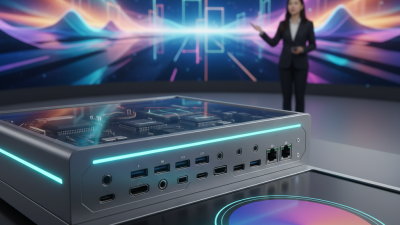
Choosing among the 10 best LED display controllers starts with understanding their signal path. A sending card receives video from a computer or processor. It then divides the image into data streams for receiving cards. Each receiving card controls a section of LED modules through network cables.
Pixel capacity is not just a headline number. A 1920×1080 canvas contains 2,073,600 pixels. However, the controller must also support the required refresh rate, grayscale depth, scan mode, and output ports. A receiving card may support a specific pixel load, while the sending card limits the total system capacity. These figures must match.
Small details matter.
During installation, I check the actual cabinet layout, cable distance, and spare capacity. A display may calculate correctly on paper but flicker after adding higher refresh settings. Signal loss can also appear when network cables run near power equipment. Keeping a sensible reserve, often 10–20 percent, helps reduce these risks.
Global buyers should verify input standards, voltage compatibility, control software, and documentation before ordering. Clear manuals improve troubleshooting across different languages and time zones. I have found that product tables rarely explain every field condition. Rechecking the pixel map and cabinet wiring remains necessary, even with experienced technicians. Mistakes happen. Good planning makes them easier to correct.
Key Benchmarks: 3840 Hz Refresh, 16-Bit Grayscale, and 4K Input
For global buyers, choosing among the 10 best LED display controllers starts with measurable performance, not product labels. A 3840 Hz refresh rate reduces scan lines and flicker during camera testing. It helps fast motion look cleaner on stage screens and retail walls. However, refresh rate alone cannot guarantee smooth video. The controller, receiving cards, cabinet wiring, and source frame rate must match. I have seen impressive specifications fail when a weak cable caused intermittent signal loss. Real installation evidence matters.
16-bit grayscale preserves subtle transitions in shadows, skin tones, and dark blue backgrounds. This benefits broadcast scenes and premium advertising. Yet poor calibration can reduce that advantage. Request gradient tests, near-black measurements, and recorded demonstrations at normal brightness. 4K input supports detailed content, but pixel pitch and processing determine visible sharpness. A 4K signal may be reduced internally. Check input ports, scaling behavior, latency, and maximum canvas size before purchasing.
Tips: Test your own 4K video clip. Confirm 3840 Hz performance with a high-speed camera. Review grayscale ramps at 10%, 25%, and 50% brightness. Document firmware versions and keep spare signal cables. Do not ignore heat. A controller may meet every benchmark on paper, yet perform poorly in a hot control room. My assessment stays cautious until several hours of continuous testing prove stable operation.
10 Best LED Display Controllers for Global Buyers - Key Benchmarks: 3840 Hz Refresh, 16-Bit Grayscale, and 4K Input
| Rank |
Controller Profile |
Max Refresh Rate |
Grayscale Processing |
4K Input |
Max Output Load |
Input Interfaces |
Output Interfaces |
HDR Support |
Recommended Application |
| 1 |
Premium UHD Controller |
3840 Hz |
16-bit |
Yes, 4K@60 Hz |
10.4 million pixels |
HDMI 2.0, DP 1.2, DVI |
8 × Ethernet |
HDR10 |
Broadcast studios, premium rental displays, virtual production |
| 2 |
High-Refresh Rental Controller |
3840 Hz |
16-bit |
Yes, 4K@60 Hz |
6.5 million pixels |
HDMI 2.0, DVI, USB |
6 × Ethernet |
HDR10 |
Concerts, touring events, live sports and temporary installations |
| 3 |
Large-Format Fixed-Install Controller |
3840 Hz |
16-bit |
Yes, 4K@60 Hz |
10.4 million pixels |
HDMI 2.0, DP 1.2, DVI |
10 × Ethernet |
HDR10 |
Shopping centers, transport hubs, stadiums and outdoor billboards |
| 4 |
Fine-Pitch Presentation Controller |
3840 Hz |
16-bit |
Yes, 4K@60 Hz |
4.3 million pixels |
HDMI 2.0, DP 1.2, USB |
4 × Ethernet |
HDR10 |
Corporate boardrooms, control rooms and education facilities |
| 5 |
Dual-Input Seamless-Switching Controller |
3840 Hz |
16-bit |
Yes, 4K@60 Hz |
6.5 million pixels |
2 × HDMI 2.0, DP 1.2, DVI |
6 × Ethernet |
HDR10 |
Live events requiring source switching, backup feeds and preview monitoring |
| 6 |
Compact 4K Event Controller |
3840 Hz |
14-bit |
Yes, 4K@60 Hz |
2.6 million pixels |
HDMI 2.0, DVI, USB |
4 × Ethernet |
Not required |
Small venues, exhibitions, retail promotions and mobile staging |
| 7 |
Synchronized Multi-Display Controller |
3840 Hz |
16-bit |
Yes, 4K@60 Hz |
10.4 million pixels |
HDMI 2.0, DP 1.2, Genlock |
8 × Ethernet |
HDR10 |
Multi-screen stages, broadcast walls and synchronized creative displays |
| 8 |
Budget Professional Controller |
3840 Hz |
14-bit |
Yes, 4K@30 Hz |
2.6 million pixels |
HDMI 1.4, DVI, USB |
4 × Ethernet |
No |
Standard indoor signage, small conference rooms and fixed installations |
| 9 |
Outdoor Advertising Controller |
1920 Hz |
14-bit |
Yes, 4K@30 Hz |
6.5 million pixels |
HDMI 1.4, DVI |
6 × Ethernet |
No |
Large outdoor advertising, roadside media and public-information displays |
| 10 |
Entry-Level Indoor Controller |
1920 Hz |
12-bit |
Yes, 4K@30 Hz |
2.6 million pixels |
HDMI 1.4, DVI |
4 × Ethernet |
No |
Basic indoor signage, schools, meeting rooms and small retail displays |
Note: Pixel capacity, refresh rate, grayscale depth and input resolution are dependent on the selected receiving-card configuration, scan mode, LED driver IC and firmware. Confirm the exact technical specification before purchase.
Ten Leading Controllers Compared by Load, Ports, Scaling, and Redundancy
10 Best LED Display Controllers for Global Buyers
Ten leading LED display controllers should be compared by practical workload, not impressive specifications alone. During commissioning, pixel load often changes after brightness limits and refresh settings are adjusted. A controller must handle the required resolution without operating at its maximum capacity. Leaving headroom helps prevent unstable images during busy scenes. However, excessive capacity can raise costs without improving the installation.
Port selection also affects daily reliability. Check the number of Ethernet outputs, fiber options, control inputs, and monitoring interfaces. Larger screens may require multiple controllers with synchronized scaling. Scaling performance matters when content moves between unusual aspect ratios or mixed cabinet sizes. A clean image should remain sharp at the edges, even when the source resolution changes. Redundancy deserves equal attention. Dual signal paths and backup power inputs can reduce downtime, but only when the system is correctly configured and tested. I have seen “redundant” systems fail because the backup path was never loaded under real conditions.
Tips:
Match controller capacity with the actual cabinet map. Test every output at full brightness. Confirm switching behavior before installation day. Keep spare cables available. Also, document firmware versions and signal routes. This step feels routine, yet it often exposes hidden compatibility problems. A controller with fewer ports may still be the better choice if its scaling is stable, diagnostics are clear, and maintenance access is simple. Reduced complexity can be valuable, though it may limit future expansion.
Global Compliance Guide: CE, FCC, IEC 62368-1, and EN 55032
For global buyers, an LED display controller is not compliant simply because it carries a CE mark. CE indicates conformity with applicable European Union requirements, supported by a technical file, risk assessment, and Declaration of Conformity. The controller should also meet IEC 62368-1, which evaluates electrical, thermal, fire, and energy hazards through a hazard-based safety approach. Ask for test reports, not only certificates.
Electromagnetic performance needs equal attention. EN 55032 addresses radiated and conducted emissions for multimedia equipment, while FCC Part 15 applies to the United States. A 2023 digital signage report by Grand View Research valued the global market at approximately USD 27 billion in 2022, showing why cross-border compliance deserves careful purchasing controls. Fast growth can encourage rushed documentation. That is a real risk.
Check the input voltage range, earthing method, enclosure temperature, and cable shielding. During evaluation, inspect the report model number against the controller label. Small differences matter. A report for a power supply may not cover the complete controller. Some suppliers also provide incomplete EMC test conditions, which makes comparison difficult. I would request accredited laboratory reports, firmware identification, serial-number traceability, and regional plug requirements before approving the ten strongest candidates. Even then, compliance can change after a hardware revision. Keep reviewing it.
10 Best LED Display Controller Buyer Profiles — Global Compliance Guide
This screening chart maps the compliance frameworks typically reviewed for ten common LED display controller purchasing scenarios.
A value of 1 indicates that the framework is generally relevant to the destination market or product evaluation, while 0 indicates that it is usually not the governing framework.
CE is a European conformity marking, FCC requirements apply to the United States, IEC 62368-1 addresses audio/video and information technology equipment safety, and EN 55032 covers electromagnetic emissions for multimedia equipment.
Final compliance depends on the complete product configuration, intended market, and applicable national requirements.
Buyer Selection Matrix for Indoor, Outdoor, Rental, and Fixed Installations
10 Best LED Display Controllers for Global Buyers
A useful controller matrix starts with the installation, not the product name. Indoor screens need precise grayscale, quiet operation, and stable color calibration. Outdoor displays demand weather-rated hardware, stronger processing, and reliable fiber transmission. Rental systems need lightweight units, fast setup, and backup inputs. Fixed installations usually value long-term monitoring and service access.
AVIXA’s 2024 Industry Outlook projected the professional AV market to reach about 422 billion US dollars by 2028. That growth increases pressure on buyers to compare lifecycle performance, not only purchase price. For pixel mapping, match the controller’s maximum resolution to the cabinet layout. A higher refresh rate helps camera-friendly venues. Still, refresh rate alone does not guarantee clean images. Signal latency, grayscale depth, and receiving-card compatibility also matter. Outdoor projects should examine brightness, thermal behavior, and surge protection. Indoor projects may prioritize low-noise operation and fine calibration.
Tips:
Build four columns: environment, signal load, service needs, and operating cost. Ask for measured power data. Request a live demo. Keep one spare input path. No matrix is perfect. Even experienced teams can overlook heat, cable length, or software learning time. The 2024 Global LED Display Market report by Research and Markets indicates continued expansion, but market forecasts vary widely. Treat forecasts as direction, not proof. Require test results, warranty terms, firmware support, and local technical response before approval.