
2026 Best Display Solution for Global Buyers?
Choosing the 2026 best display solution for global buyers requires more than comparing screen size and price. A reliable display solution must fit real working conditions, customer expectations, and local service capabilities. A bright showroom panel may perform poorly near a sunlit window. A thin office monitor may struggle in a dusty workshop. These details often decide long-term value.
Experienced buyers usually examine brightness, contrast, color accuracy, viewing angles, connectivity, energy use, and expected service life. They also check certification requirements, warranty terms, replacement parts, and technical support. A trusted manufacturer should provide clear specifications and practical test data. Factory audits, sample testing, and installation trials can reveal problems before large orders begin. This process feels slower. It usually prevents expensive surprises.
Global purchasing adds another layer of complexity. Voltage standards, shipping conditions, language support, and after-sales response can change the final result. The lowest quotation is not always the lowest total cost. That assumption can fail. Buyers should compare performance over several years, not only the initial invoice. A dependable partner will discuss limitations honestly, including heat, moisture, software compatibility, and maintenance needs. No display is perfect.
This guide explores how buyers can evaluate display technologies for retail, offices, education, hospitality, and industrial environments in 2026. It focuses on measurable performance and practical experience. It also recognizes that regional needs differ. The right choice balances image quality, durability, compliance, service, and budget. Careful research remains essential.
What Defines a Global Display Solution in 2026
2026 Best Display Solution for Global Buyers?
What Defines a Global Display Solution in 2026
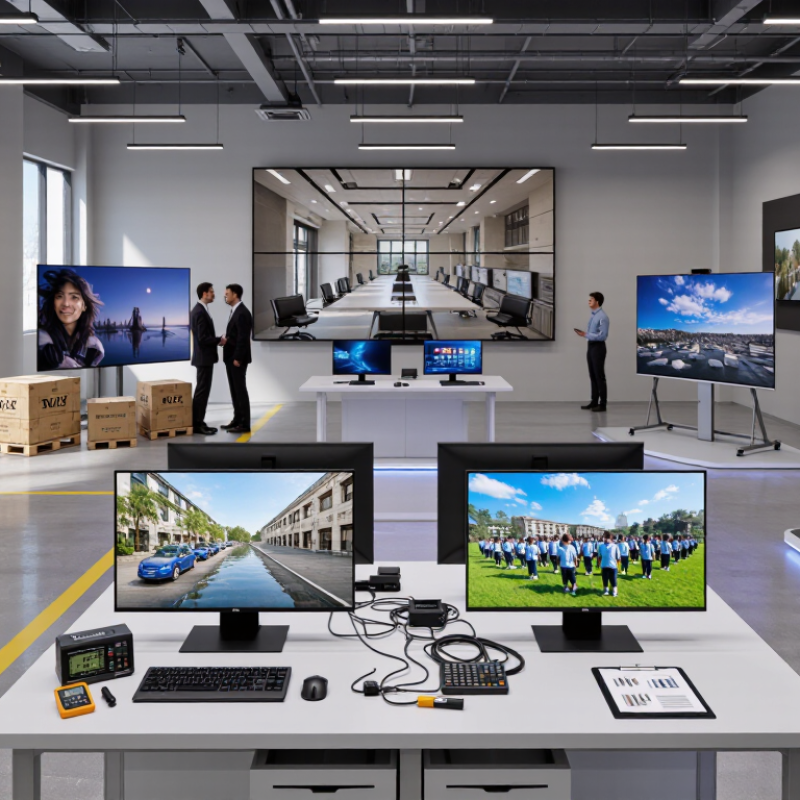
A global display solution must work beyond a showroom demo. It should remain readable under harsh sunlight, stable in humid rooms, and responsive after long operating hours. In real installations, small details matter: readable fonts, quiet cooling, accessible controls, and strong mounting hardware. A multilingual interface also needs more than translated words. It must support local formats, time zones, measurement units, and user habits.
Reliability begins with evidence. Buyers should request current test reports, service procedures, warranty terms, and documented performance data. Energy efficiency matters, especially for large deployments with hundreds of screens. Remote monitoring can reveal overheating, signal loss, or unusual power use before a failure spreads. Security also deserves attention, including controlled access, encrypted communication, and regular software maintenance. Local regulations vary, so compliance should be checked with qualified professionals in each market.
Tips: Test one unit in its real environment first. Measure brightness at different times. Ask installers about replacement access. Keep spare parts nearby. No design is perfect. We often underestimate cleaning, language updates, and staff training. A solution may look advanced yet remain difficult to repair. That weakness should be discussed early, not hidden behind impressive specifications.
| Display Solution | Best-Fit Applications | Typical Pixel Pitch or Resolution | Typical Brightness | Refresh Rate | Environmental Protection | Typical Operating Range | Expected Service Life | Key Global-Buyer Advantage |
|---|---|---|---|---|---|---|---|---|
| Indoor Fine-Pitch Direct-View LED | Control rooms, broadcast studios, corporate experience centers, premium retail and command centers | Approximately 0.9–2.5 mm pixel pitch; common display resolutions include Full HD, 4K and larger custom canvases | Approximately 600–1,500 nits, adjustable for indoor viewing comfort | Typically 1,920–3,840 Hz or higher | Usually IP30–IP40 | Approximately 0°C to 40°C; humidity limits depend on the cabinet and installation design | Approximately 80,000–100,000 hours to 50% of original LED brightness under specified conditions | Seamless large-format images, narrow pixel pitches and flexible aspect ratios |
| Outdoor Direct-View LED | Outdoor advertising, stadiums, transportation hubs, building façades and public information | Approximately 3–10 mm pixel pitch; larger pitches are used for long viewing distances | Approximately 4,500–10,000 nits, depending on sunlight exposure and local regulations | Typically 1,920–3,840 Hz | Commonly IP65 front / IP54 rear | Approximately −20°C to 50°C; wider ranges require suitable thermal management | Approximately 80,000–100,000 hours to 50% of original LED brightness | High daylight visibility, modular maintenance and suitability for large outdoor surfaces |
| Commercial LCD Video Wall | Control rooms, security monitoring, retail, meeting spaces and digital signage networks | Usually Full HD or 4K per panel; common panel sizes are approximately 46–55 inches | Approximately 500–700 nits for general commercial models; higher-brightness models are available | Commonly 60–120 Hz, depending on the panel and application | Typically indoor-rated | Approximately 0°C to 40°C | Approximately 50,000–60,000 hours of panel operating life, depending on usage and brightness | Predictable image quality, mature supply chains and efficient operation for tiled indoor walls |
| Transparent LED Display | Retail windows, shopping centers, museums, architectural façades and stage installations | Approximately 3.9–10 mm pixel pitch; transparency commonly ranges from about 60% to 90% | Approximately 3,000–6,000 nits, depending on transparency and ambient light | Typically 1,920–3,840 Hz | Indoor or semi-outdoor; project-specific | Approximately 0°C to 40°C for indoor use; outdoor versions require an appropriate enclosure | Approximately 80,000–100,000 hours to 50% of original LED brightness | Preserves daylight and sightlines while adding dynamic content to glass surfaces |
| E-Paper Signage | Price labels, transportation information, room signs, shelf labels and low-power public information | Commonly 1.54–13.3 inches for labels and signs; larger modular formats are also available | Reflective technology; readability depends primarily on ambient light rather than emitted brightness | Typically seconds for color updates; not designed for full-motion video | Model-dependent; often indoor or sheltered outdoor | Commonly approximately 0°C to 40°C; specialty products support wider ranges | Often several years of display operation; battery life may range from months to multiple years | Very low energy consumption and excellent readability in bright ambient light |
| Laser Projection | Large venues, education, simulation, museums, events and temporary installations | Typically Full HD or WUXGA; 4K and higher-resolution systems are available | Approximately 3,000–30,000 lumens, depending on venue size and projection distance | Usually 60–120 Hz for standard video applications | Requires controlled installation conditions | Commonly approximately 5°C to 40°C | Approximately 20,000–30,000 laser-light-source hours, depending on operating mode | Large image sizes with flexible installation and no permanent LED pixel grid |
Related Posts
-
Top 10 Display Solutions for Global Buyers to Consider
-
2026 Top Mini LED Display Innovations for Global Buyers?
-
Top 10 Types of Outdoor LED Displays for Global Buyers
-
How to Choose the Best Outdoor LCD for Your Needs?
-
How to Choose the Best Outdoor Display for Your Business Needs
-
Top High Brightness LCD Displays for Ultimate Visibility?